

Most facility managers and building owners understand that height safety systems are a compliance requirement. What’s less commonly understood is that compliance and genuine safety are not always the same thing.
A system can pass inspections yet still be the wrong fit for the building it’s installed on. This disconnect is more common than it should be, such as when a contractor arrives to do rooftop work and finds that the anchor configuration doesn’t match how they need to move across the surface.
Design drives everything
A well designed height safety system maps out the full scope of how a building is accessed and maintained, from rooftop plant equipment and facade cleaning to gutters, skylights, and any area a worker might reasonably need to reach.
Where this breaks down is when systems are designed in isolation, without input from the people who will use them. An engineer might specify anchor points at structurally convenient locations that don’t reflect the actual movement paths a window cleaner or HVAC technician needs to follow. The result is a system that’s technically certified but practically difficult to use, which encourages workers to improvise. And improvisation at height is where incidents happen.
A properly designed height safety system accounts for travel distances between anchor points, connection and disconnection sequences, and the types of PPE workers will be using. It also considers the building’s future maintenance needs, not just what’s required at the time of installation.
Fixed systems and what they need to perform
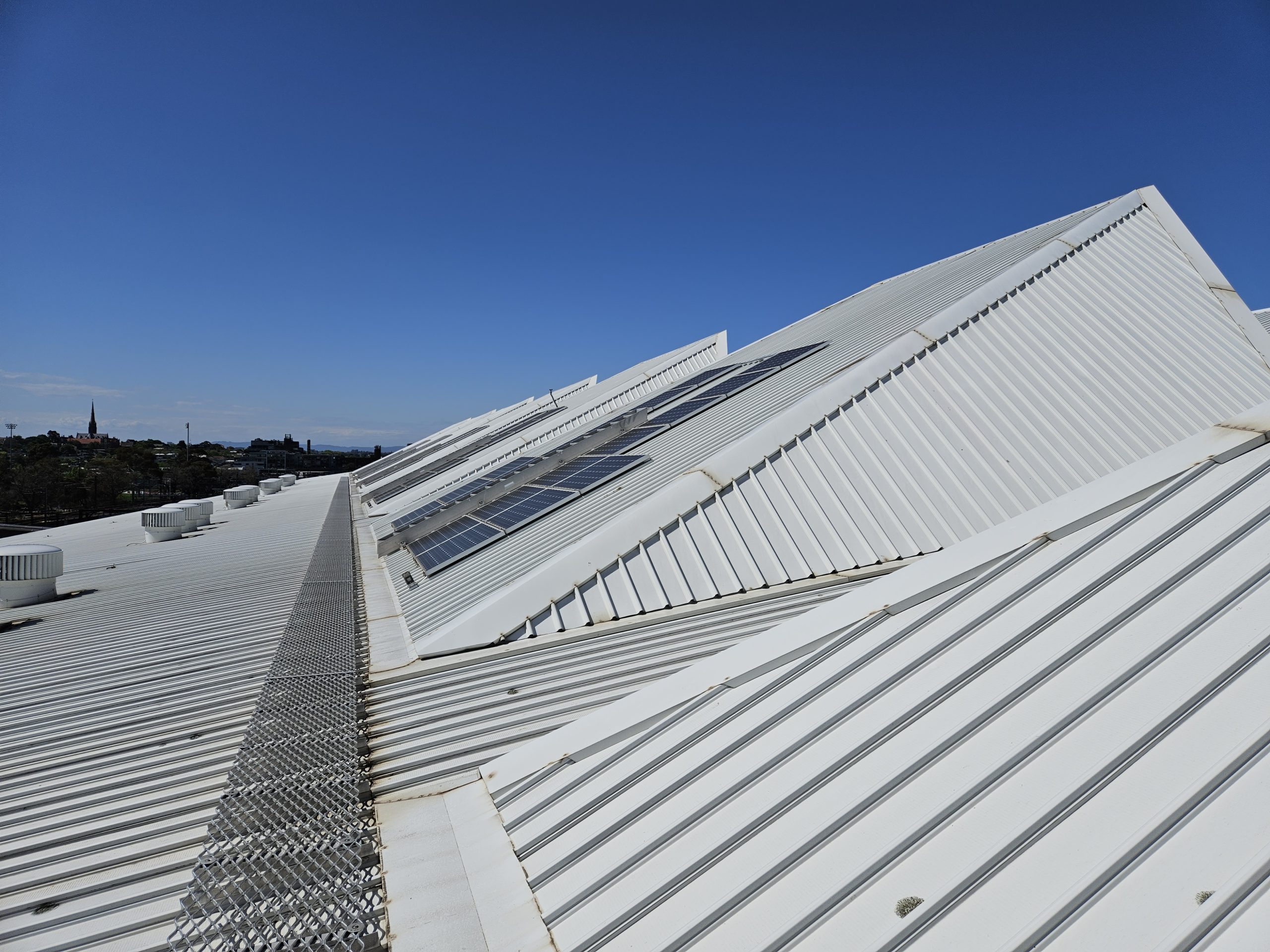
Walkways, anchor points, static lines, and abseil points are the backbone of any fixed height safety system on a commercial or high-rise building. These components are embedded into the structure and expected to last the life of the building, which means the initial specification matters enormously.
Corrosion resistance is a critical factor, particularly for buildings near the coast or in areas with high humidity. Stainless steel components and appropriate sealants around fixings help protect against the environmental degradation that undermines anchor performance over time.
Load ratings also need to be correctly specified from the outset. Where multiple workers may be connected to a single anchor simultaneously, the system must be engineered to handle that load, not designed for single-user access only.
The building owner’s role
Building owners and facility managers carry the duty of care for height safety on their sites. That obligation doesn’t end once a system is installed. AS/NZS 1891 requires fixed systems to be formally inspected and certified by a qualified inspector at minimum every 12 months, with records maintained and available on request.
Beyond annual inspection, any time structural work, rooftop equipment changes, or facade alterations are carried out, the height safety system should be reviewed. Changes to the building can affect anchor point load paths in ways that aren’t immediately visible.
Vertimax designs, installs, and inspects height safety systems across commercial, residential, and institutional buildings throughout Australia. If your building is due for a system review, or you’re planning a new build or refurbishment, talk to our team about getting the design right from the start.
Sorry, the comment form is closed at this time.