

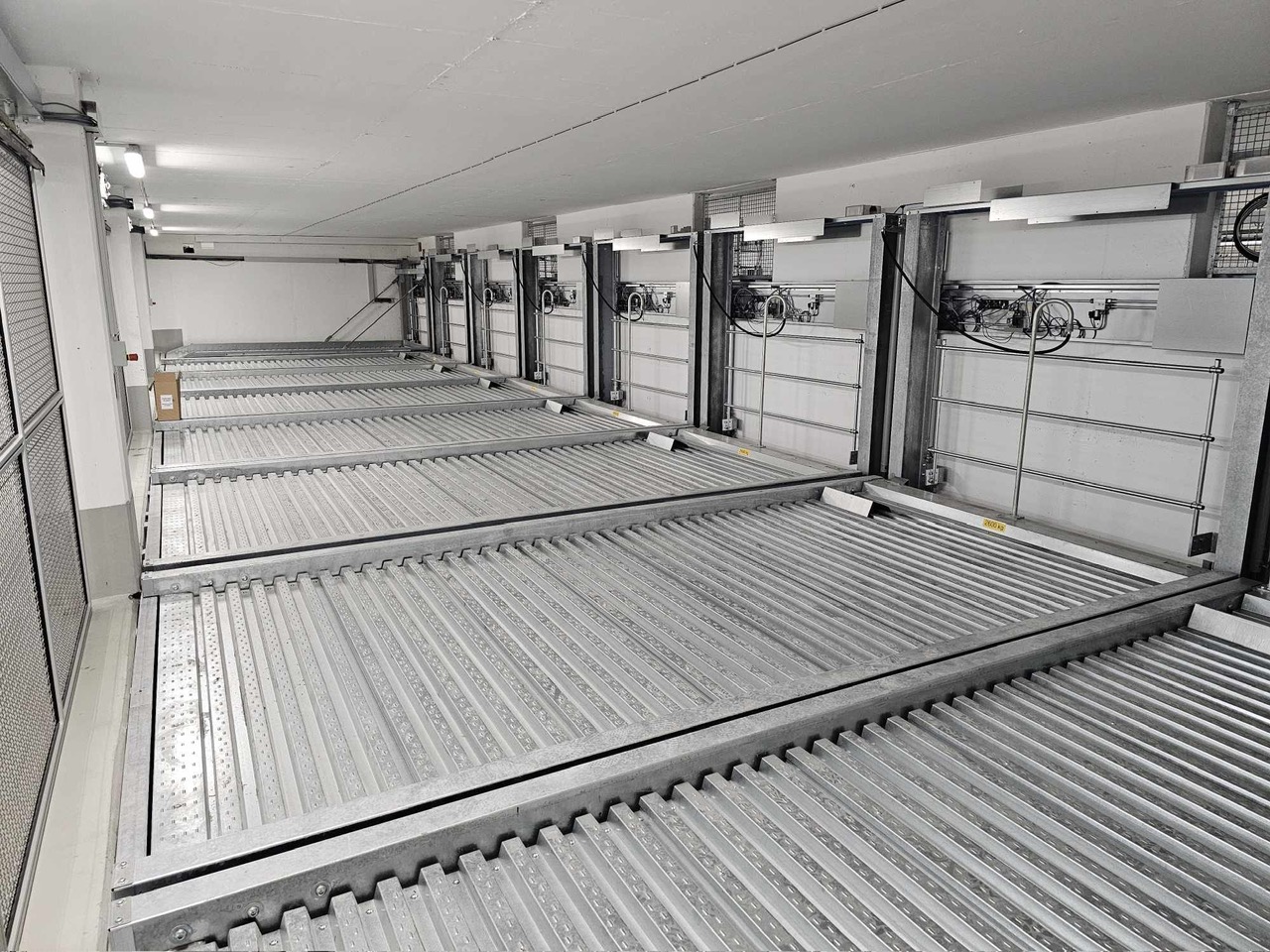
Deciding to incorporate a car stacker into your project is usually the easy part. The harder question which comes up in almost every tight urban development we work on, is which type of system is right for that specific site. The answer depends on more factors than most expect and getting it wrong can create headaches for building managers, body corporates, and residents.
Here’s what we’ve learned from installing automated car stacker systems across residential and commercial developments throughout Australia.
Understanding the three main car parking systems types
Car stackers fall into three broad categories: dependent, semi-automatic, and fully automated. Each one has its place, and each comes with trade-offs worth understanding before you commit to a direction.
Dependent stackers are the most straightforward option. They use a two or four post platform where the lower vehicle needs to be moved out before the one above it can come down. For a private residential garage where both cars belong to the same household, this arrangement works fine. In an apartment building where separate owners occupy each level, it quickly becomes a problem. Nobody wants to be knocking on their neighbour’s door at seven in the morning on a weekday to move their car.
Semi-automatic car stackers remove that issue entirely. Each platform operates independently and can be called down by its individual user via a key, fob, or control panel. This is the system we see specified most often in Australian residential developments, and for good reason. Residents get their own bay without any coordination required, and the mechanical simplicity of the system means maintenance costs stay reasonable over the long term.
Fully automated car parking systems are the most sophisticated of the three. The driver parks on a pallet at ground level, steps out, and the system handles the rest, no manual platform operation involved. These suit larger commercial or hotel applications where high throughput is a priority and the project budget supports a more complex mechanical installation.
Determining site needs
Beyond system type, the physical characteristics of your site will do a lot of the decision making for you.
Height is the most critical factor. A standard double stacker typically requires a pit depth of around 1.8 to 2 metres and a clear ceiling height of approximately 3.5 to 3.6 metres above the platform. Triple and quad configurations need progressively more vertical clearance. If your basement was originally designed for conventional parking at a 2.7 metre floor to ceiling height, a standard double stacker won’t fit without modifications.
Bay width is another consideration that’s easy to overlook at schematic stage. Stacker platforms require slightly more width than a conventional parking bay to accommodate the structure itself and maintain safe clearance for doors. Where the structural grid doesn’t allow for this, adjacent bays may need to be reconfigured.
Vehicle types also matter. Most residential grade systems are rated for vehicles up to around 2,000 to 2,500 kg and between 1,550 and 1,800 mm in height. If the building is in an area where large 4WDs and utes are common, the system needs to reflect that, otherwise you end up with residents who technically have an allocated bay but can’t use it.
Selecting a quality manufacturer
Not all car stacker systems are built to the same standard, and the quality gap in this market is wider than most developers realise until something goes wrong.
Lower cost systems, often manufactured with less rigorous quality control, tend to develop issues within the first few years of operation. Platform misalignment, hydraulic leaks, control panel failures, and corrosion in underground environments are all common complaints we hear from building managers who inherited systems they didn’t specify.
At Vertimax, we supply systems through our exclusive partnership with Nu Space, a German manufacturer whose products are engineered to European industrial standards. That means tighter fabrication tolerances, better protection against the corrosive conditions typical of underground parking, and more reliable hydraulic and electrical components. For a system that’s going to operate in a damp basement for twenty years, that level of build quality translates directly into lower maintenance costs and fewer unplanned callouts over the life of the building.
Planning early
One of the most consistent mistakes we see on projects involving car stackers is leaving the specification too late. By the time a developer circles back to confirm stacker details, the structure is often already designed and the pit depths, slab penetrations, drainage provisions, and electrical rough-ins that should have been included in the base building aren’t there.
Retrofitting those elements after the fact is always more expensive, and it almost always results in compromises somewhere.
Our recommendation for new builds is to engage during schematic design so that everything the structural engineer and services consultants need such as loading requirements, pit dimensions, drainage strategy, electrical provisions can be incorporated from the outset. We can also work alongside traffic engineers to advise on aisle widths, turning circles, and queuing requirements. That kind of early involvement significantly reduces the risk of clashes and rework when construction starts.
Consider ongoing maintenance
Car stackers live in some of the most demanding conditions of any building system. Basements are dusty, damp, and subject to temperature variation. Without regular servicing, components degrade faster and breakdowns become more frequent.
Before you finalise a supplier, it’s worth asking some direct questions: How often are inspections scheduled? What does the maintenance contract cover? What is the response time for a breakdown callout? Are spare parts held in Australia or do they need to be shipped from overseas?
These questions might feel premature during the design phase, but the answers will define the day-to-day experience for building managers and body corporates for years to come.
Our service and maintenance contracts include scheduled inspections, preventive maintenance, and callout support. We also run an induction program for building managers and residents covering safe operation. That handover process makes a genuine difference to how well the system is managed and maintained once the building is occupied.
Ready to discuss your project?
Choosing the right car stacker system comes down to three things: matching the configuration to your site, getting the right people involved early enough to integrate it properly into the design, and selecting a supplier who will support the installation through its entire lifecycle.
At Vertimax, we work with developers and architects across Australia to get all three right. If you have a project in the early stages or you’re trying to resolve a specific site constraint, we’re happy to discuss it.
Our team can walk you through system options, review your site constraints, and provide drawings and loading specifications your design team can work with directly. No obligation, just practical advice from people who work in this space every day. Get in touch: https://vertimax.com.au/contact-us/
Sorry, the comment form is closed at this time.