Upgrading an Ageing BMU Back to Life in a Commercial Building
Extending the life of an ageing BMU system through a comprehensive upgrade that improved safety, compliance and reliability, all delivered with minimal disruption to a fully occupied commercial building.
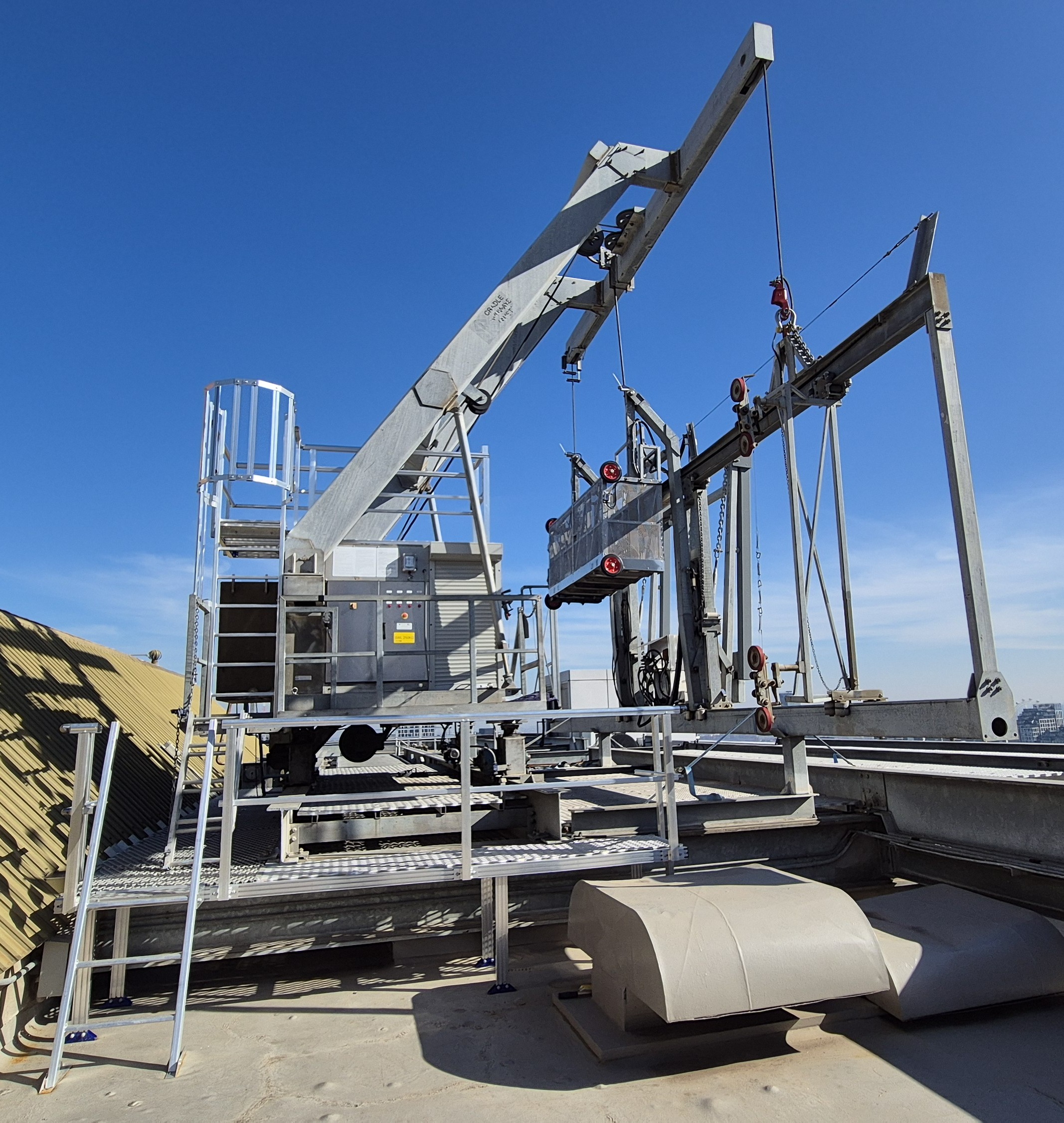
120 Spencer Street, formerly known as MMBW House is an established commercial building in Melbourne’s CBD, managed by CBRE. The building’s facade setbacks required a dedicated roof-mounted Building Maintenance Unit with a pantograph cradle system to maintain full access. Over time, the existing BMU and associated rooftop infrastructure had deteriorated to the point where routine maintenance was becoming unsafe and increasingly difficult to carry out.
The Challenge: Deteriorating Equipment in an Occupied Building
Inspection reports across the BMU system and rooftop infrastructure identified a range of issues that had accumulated over the years. Worn mechanical components, corrosion, and outdated electrical and overload protection systems had made the equipment unreliable and, in some areas, unsafe to operate. Track switch systems required excessive manual force to activate, creating operational risk for maintenance personnel.
Several rooftop areas had poor access arrangements, increasing fall risk for operators and making it difficult to carry out servicing safely. The system also needed to be brought more in line with current Australian Standards. Adding to the complexity, all works had to be staged and planned around an occupied commercial building, minimising disruption to tenants and day-to-day operations.
The Vertimax Solution: A Full Upgrade Addressing the Root Causes
Vertimax was engaged following detailed inspection findings and developed an upgrade approach that addressed the root causes rather than applying isolated repairs. The scope covered both the BMU system and the broader rooftop height safety infrastructure.
Key works included:
- Cradle and mechanical upgrades: New meshing for the cradle, replacement wheel bearings and bushes, and new protective covers throughout.
- Overload protection: New overload sensing devices integrated directly into the BMU control system to meet current safety requirements.
- Operator communications: GSM-based rooftop-to-cradle intercom system installed to improve real-time communication between operators during suspended access.
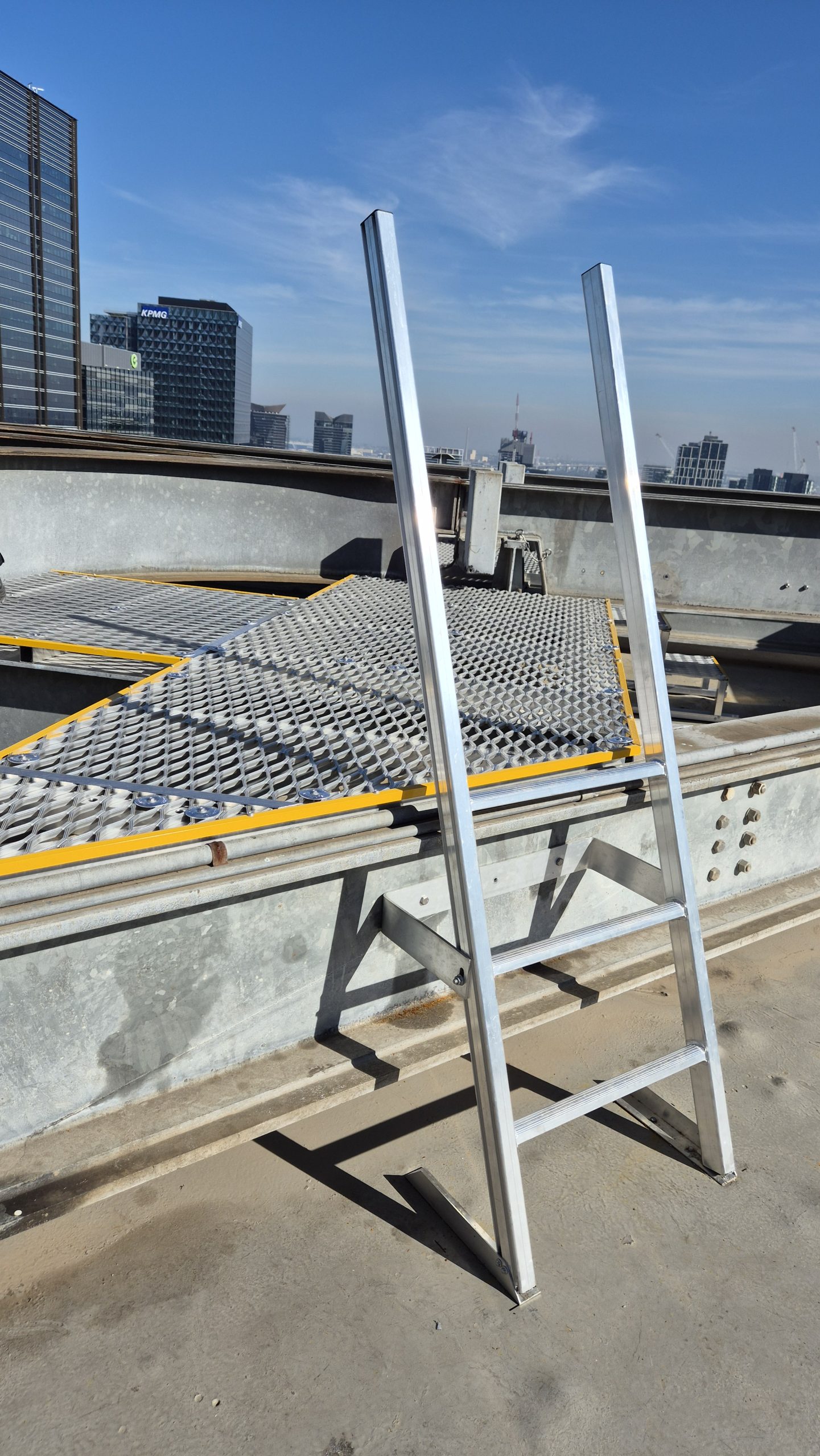
- Rooftop access improvements: New walkways, upgraded rail switches, roller shutters, ladders, and handrails installed to provide safer and more practical access for maintenance personnel.
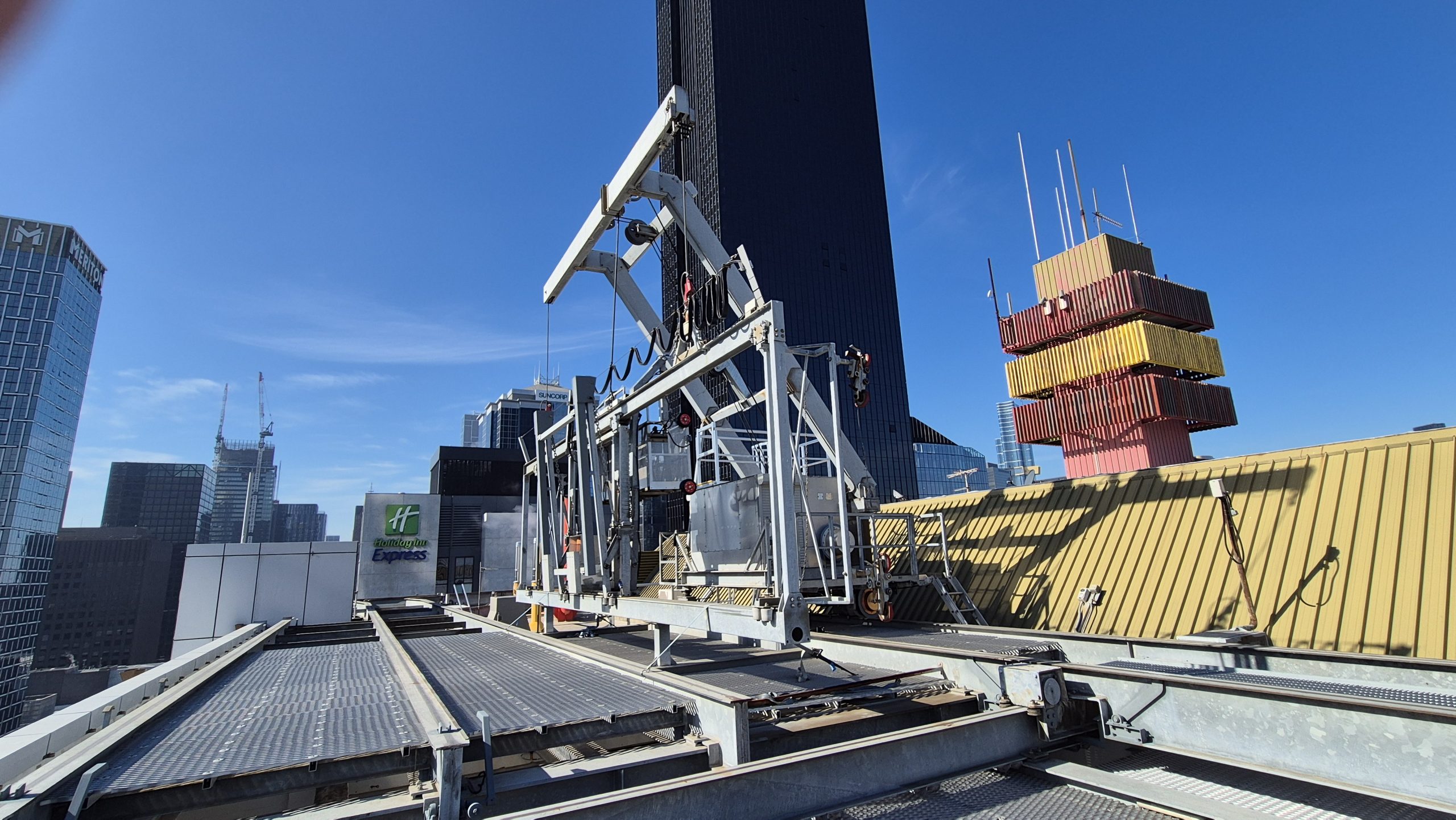
The BMU traverses on a double rail track system with a mechanically operated rail switch to reach the building corners and setback facade areas. The cradle is fitted with a hydraulically operated system that brings it close to the facade when suspended, allowing operators to safely access the setbacks that define this building’s profile.
The Result: A Compliant, Reliable System Delivered Without Disruption
Vertimax delivered a practical, well-coordinated upgrade that extended the service life of the existing BMU infrastructure without replacing it entirely. The works addressed ageing and non-compliant components, improved operator access and communication, and reduced manual handling risks across the rooftop.
The project was completed within a live building environment with minimal disruption to occupants, thanks to careful staging and Vertimax’s experience working around operational buildings. The client now has a compliant, reliable system that meets current Australian Standards and gives maintenance personnel safe, practical access to all areas of the facade.